Ever since the 1947 most of Indian politicians have betrayed trust of common man. This song is from a Marathi movie Sinhasan which was released in 1979. Story unfolds with a journalist covering state's opposition and ruling parties. In the end he feels betrayed as both opposition and ruling groups have joined hands for their greed of power while the real issues of unemployment, poverty, discrimination based on caste/class remains unsolved.
Saturday, 28 March 2015
The song which is still relevant in 2015
Ever since the 1947 most of Indian politicians have betrayed trust of common man. This song is from a Marathi movie Sinhasan which was released in 1979. Story unfolds with a journalist covering state's opposition and ruling parties. In the end he feels betrayed as both opposition and ruling groups have joined hands for their greed of power while the real issues of unemployment, poverty, discrimination based on caste/class remains unsolved.

Wednesday, 11 March 2015
Making separatists corrupt by awarding a role in government
I am writing this blog after the recent controversy about
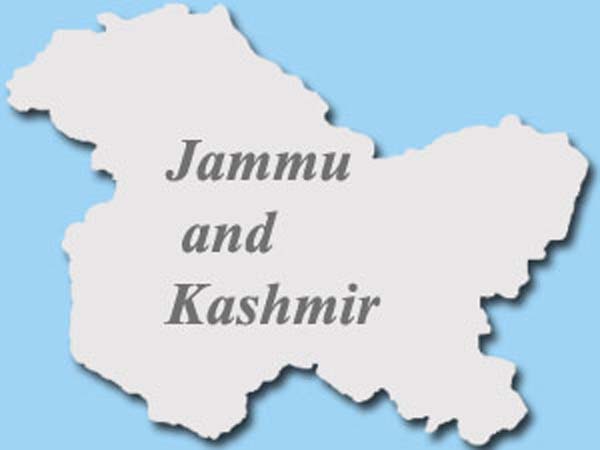
Musarrat Alam took place in the state of Jammu Kashmir. Mufti government which
is in alliance with Hindu Nationalist BJP has ordered release of alleged
separatist Alam. The Supreme Court had asked state govt why they kept Alam in
jail without zero charges.
There is a common Indian conscience on the matter that, any
separatist no matter how peaceful he/she is should be jailed and there shouldn’t
be any talks held with him/her. BJP is being charged by many that they are playing an
opportunist in this whole drama. This is because in the past since birth of
RSS, JanSangh days these nationalist people have always opposed any concessions
to Kashmiri Separatists, they are opposed to Article 370 which provides JK
state with special powers cum status. But, it is known to all that in last
decade BJP has softened its idealist stand on many of the core issues because
they have realized that what they did in past was just a political compulsion. It's not just BJP but Nation has witnessed the dilution of hardline principle by
Shivsena too over the topics of Hindutva, Secularism, Valentine’s Day,
Women’s rights, Reservation to backward castes. This only proves that once you
are in power you shed your extremist stand to make a wider appeal and it is
obvious that no one will invest in your state if you can’t give a riot free,
liberal environment.
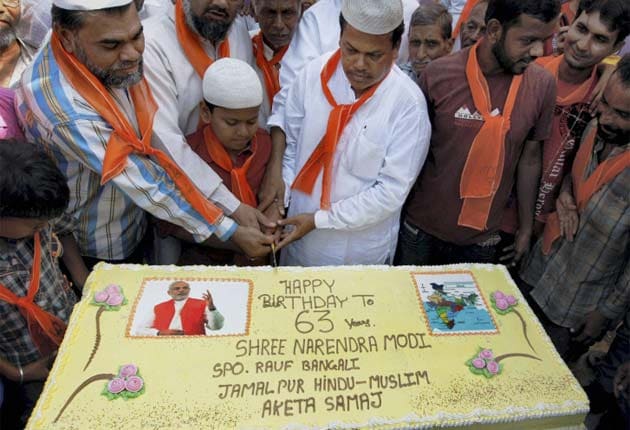
The country should welcome BJP and PM Modi when they are
diluting their earlier hard stand for the so called peace and development of
Kashmir valley.
Now, let’s come back to question whether Musarrat Alam
should have been released or not?
A common Indian opinion as I have pointed out in my article
is against release of separatist. But, people in Delhi should not give commentary
on JK is my personal opinion for they don’t know the ground realities of
Kashmir. Mufti govt is an elected govt and not any dictatorship, so first of
all calling Mufti a pro Pakistani CM is uncalled for.
 |
| Flag of Kashmir |
How do you stop the insurgency? There can be many solutions
to it but Punjab and Nagaland are some of the successful experiments by then
Rajiv Gandhi government to stop insurgence and bring to mainstream the
rebellions. Solution is bringing rebels into politics. Make them a member of
government body. In the best case they will strive to make peace with centre
and work for development of region, in worst case they will do the corruption
and make some money which is not such a bad case when compared to insurgency.
At last they will give up on earlier separatist stand.
Let’s repeat the examples of Nagaland & Punjab in Jammu
and Kashmir too. Prime Minister Modi is heading in the right direction. Whether
you like it or not but the Kashmir problem will soon be resolved and 2 decades
later we would be wondering whether there was any problem at all.
Sunday, 15 February 2015
Most beautiful first lady of all time
One and only Jackie Kennedy qualifies for this award. Such a gracious and heart warmening lady she was. She had toured India in 1962. India's relations with Unitettyd States remained smooth until her Husband John F Kennedy was assassinated. After which bilateral relations suffered which got smoothed only after Indian economy was liberalised in 1991 by Dr Manmohan Singh.
 |
| Jacqueline Kennedy (32) at Taj Mahal posing for a photo during her visit to India (March, 1962) |
Plural flavor of Indian Secularism
I have seen many Indian politicians visiting religious places of all the religions in India. In last few decades we have seen that they have been often criticized by culturally right semi-literate people.
I advice them to take out some time and read some history books on Indian culture right from 4000 BC to today. I bet they will come to know about great tradition of plural culture respected by then Samrat Ashoka and Akbar.
Now, let's come back to current year. I think it is not wrong on part of politician when he visits a religious place, but precaution should be taken by him in a diverse country like India. If you are visiting a temple then you should also treat Mosques and Churches with same parameter. Let me put forth some letter conversation between conservative Rajendra Prasad who was president in 1950's and liberal Nehru who was Indian prime minister at that time. Situation is Rajendra babu was invited for inauguration of restored Somnath Temple in Gujarat.
Nehru wrote to him -
‘I feel that it would be better if you did not preside over this function.’Rejendra babu in his speech there said -
‘I respect all religions and on occasion visit a church, a mosque, a dargah and a gurdwara.’
This should seal the debate. It is not that only Hindu politicians visit Mosques, if you google a little you will find that contemporary J & K CM Omar Abdullah used to visti visit temple in a state where Hindus are in minorities. One can wish to call it tokenism but I want to urge that since this tokenism reassures minority community that their rights would be upheld, I find it any time better than majoritarianism.
Also, there are some elements in India one comes from Hyderabad and another from Gujarat. You will not find them visiting religious places of other religion. I don't want to name them. If you are wise you know them. One last request keep your eyes open to differentiate between Secularism and pseudo-Secularism at the same time do differentiate between Nationalism and Religious Nationalism too.
Wednesday, 4 February 2015
This reply made my day
@a20nitin Your faith, your trust is sacred to us. Together we will create a world class Delhi. http://t.co/MlsIT5R85r
— Arvind Kejriwal (@ArvindKejriwal) February 4, 2015
Friday, 30 January 2015
Misguiding in the name of Ambedkar
These days a debate has been initiated by some mischievous elements in the Society about Dr B R Ambedkar's stand about the words Secular and Socialist in preamble of the constitution. Meanwhile, Information
& Broadcasting (I&B) Ministry’s Republic Day print advertisement on
Monday omitted the words "socialist, secular" in the image of the
Preamble to the Constitution. After which some people on social media started a
petition to present strong disapproval to this act by govt of India.
Let's try to gather some facts i.e some real quotes from Ambedkar. I will quote him. Some of these quotes have directly taken from 11 volumes of parliamentary / constituent assembly debate.
Condemn the mischievous govt ad on 26th January, omitting 'secular' and 'socialist' from the... http://t.co/Av7oaxUZxF
— meena kandasamy (@meenakandasamy) January 28, 2015
While some other defended this act of government.
‘secular’ and ‘socialist’ words are dropped from the Ministry of I&B advertisement from Preamble.
Great Initiative.
— Hindu Legal Cell (@hindulegalcell) January 28, 2015
So, when were these words added to constitution and by whom?
These words were added to the preamble in 42nd amendment by Indira Gandh govt in 1976 but were not removed by Janta Party govt when they came to power in 1977. Though these words were not inducted in the original preamble, a spirit of Social and Secular nature was always there as one can identify by reading preamble and if not sure by further reading the 11 volumes of working of constituent assembly as recorded. |
| Original unamended preamble of the constitution of India |
Let's try to gather some facts i.e some real quotes from Ambedkar. I will quote him. Some of these quotes have directly taken from 11 volumes of parliamentary / constituent assembly debate.
Secular
This is not mine but Ambedkar's own quote -
It (secular state) does not mean that we shall not take into consideration the religious sentiments of the people. All that a secular state means that this Parliament shall not be competent to impose any particular religion upon the rest of the people. That is the only limitation that the Constitution recognises
He further says -
The State should guarantee to its citizens the liberty of conscience and the free exercise of his religion including the right to profess, to preach and to convert within limits compatible with public order and morality
I interpret the above lines as Indian state will preserve plural culture of nation. Hence, you cannot doubt the secular credentials of this man though we can agree on a fact that word Secular is inherently expressed in Fraternity.
Socialist
Now, coming to his views on Socialist state. His various works and articles shows that Ambedkar believed in State Socialism in which he advocated private property of the individual. He said-
My social philosophy may be said to be enshrined in three words: liberty, equality and fraternity. My philosophy has roots in religion and not in political science. I have derived them from the teachings of my master, the Buddha.
Did you see the word equality in above mentioned quote? Yes, right, he was a proponent of mixed economy but at the same time we cannot ignore the fact that his life was dedicated to struggle against oppression of Caste system which is different from Class system prevalent in Western world. He always believed in the system of state socialism in which there would be a classless and caste less society and without forming a caste less society one cannot achieve objectives of Socialism ie class less society.

In short we can describe him as a person who advocated a purely secular state like what today France is and free market economy with special consideration to upheaval of oppressed classes.

At the most we can call him economically at the center and in religious context a non-communal or a plural person respecting diversity of culture in India.
Monday, 1 December 2014
Yes, building an egalitarian society is possible
As chief minister, Namboodiripad pioneered radical land and educational reforms in Kerala, which helped it become the country's leader in social indicators.
Subscribe to:
Posts (Atom)